


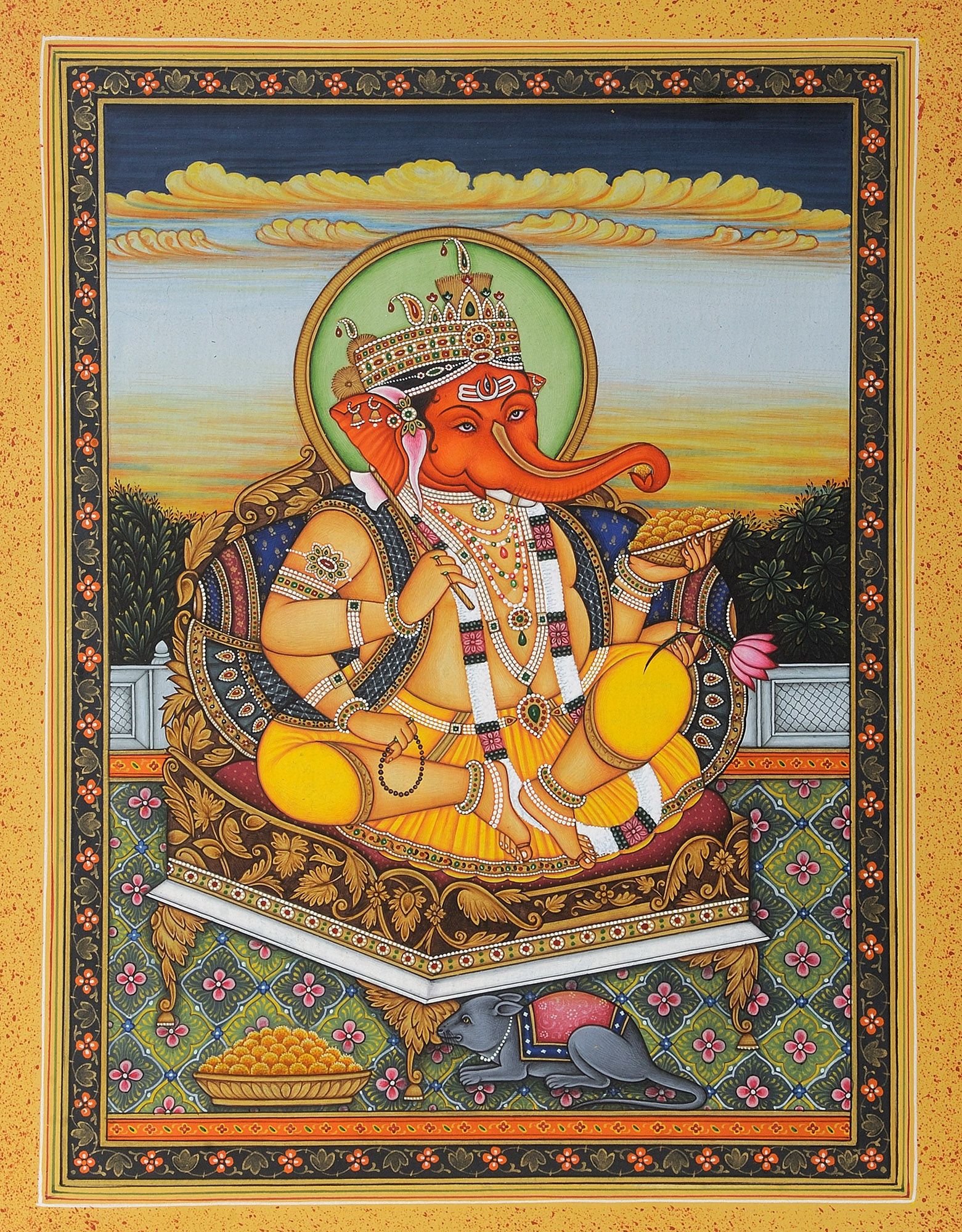

Each tithi in the lunar calendar has a deity who governs its energy. But have you ever wondered why Chaturthi, the fourth lunar day, was given to Lord Ganesha and not to any other deity?
The Varaha Purana holds the answer.
Chaturthi is called a Rikta Tithi, and Rikta means empty or hollow. It represents a moment in the lunar cycle when the moon’s fullness begins to wane, symbolizing an inner void. Why then would the remover of obstacles, Vighnaharta, preside over a tithi of emptiness?
The story goes this way.
Once, the Devas observed a strange imbalance in the world. People performing noble deeds faced endless obstructions, while those with selfish or evil intentions seemed to succeed without effort. Disturbed by this injustice, both the Devas (gods) and the Pitris (manes or ancestors) gathered to find a solution.
They decided to seek counsel from Lord Rudra, the most intelligent and insightful among the gods. After hearing their concern, Rudra turned toward Uma, his consort. But behind her, he noticed something peculiar. The sky was empty. Rudra reflected for a moment.
“There’s a part of me in fire, water, air, and earth,” he thought, “but none in ether, the element of space.”
Then Rudra laughed. And from that cosmic laughter, a radiant being emerged in the sky, brilliant, youthful, and almost identical to Rudra himself.
The gods were astonished by this dazzling boy’s beauty. Even Uma’s gaze lingered upon him with deep wonder. Seeing this, Rudra grew angry, thinking, “Ah, the nature of women, ever drawn to beauty.” In a moment of fury, he cursed the boy, saying:
“Oh child, you shall bear the face of an elephant, a protruding belly, and wear a sacred thread made of a serpent.”
Overcome with wrath, Rudra rose and shook violently. From the drops of his sweat that fell to earth, countless beings with elephant faces were born. They were immensely powerful, their strength unmatched, and they began to destroy everything in sight.
Alarmed, Brahma appeared in the sky and spoke:
“O Rudra, channel this power. Let this divine being become the leader of these Ganas (celestial hosts). Let him obstruct evil deeds and remove obstacles from the path of the righteous.”
Then Brahma vanished.
Rudra’s anger cooled. He looked upon the radiant boy and declared:
“From this day forward, you shall be known as Ganapati, Vinayaka, and Vighnaharta, the lord of the Ganas, the remover of obstacles, and the one who decides which paths must flow and which must pause.”
All the gods blessed him, and Uma accepted him as her own son.
This entire divine event occurred on the Chaturthi Tithi, and from that day, the fourth lunar day came under Lord Ganesha’s rulership. Because he was born from Rudra’s laughter in the sky, Ganesha governs the Ether (Akasha) element among the Pancha Tattvas, the five great elements.
Hence, Chaturthi, though Rikta or hollow by nature, became the day of Ganesha, the one who fills emptiness with wisdom and transforms obstacles into opportunities for spiritual growth.
It is said that anyone who constantly faces obstacles should observe a fast on Chaturthi, worship Ganesha by reciting his stotras, and partake in til (sesame seeds) after offering them in prayer. Such devotion aligns one’s inner space with the cosmic order that Ganesha governs, the balance between effort, humility, and divine timing.